

Aluminium finishing
Hard anodising
Hard anodising builds a thick, dense oxide layer integral to the aluminium itself, giving high wear resistance, surface hardness, and corrosion protection for parts that see friction, pressure, or harsh environments. Wear resistance can approach that of hardened steel while keeping aluminium's light weight. We process to BS ISO 10074 and your own customer specifications.
- Thickness
- 25–70 microns
- Standards
- BS ISO 10074
- Turnaround
- 5–7 working days
Hard anodising
A thicker, denser oxide layer for high wear resistance, surface hardness, and corrosion protection, suited to parts that see friction, pressure, or harsh environments. Wear resistance can approach that of hardened steel while keeping aluminium's light weight. For colour and general corrosion protection, see sulphuric anodising.
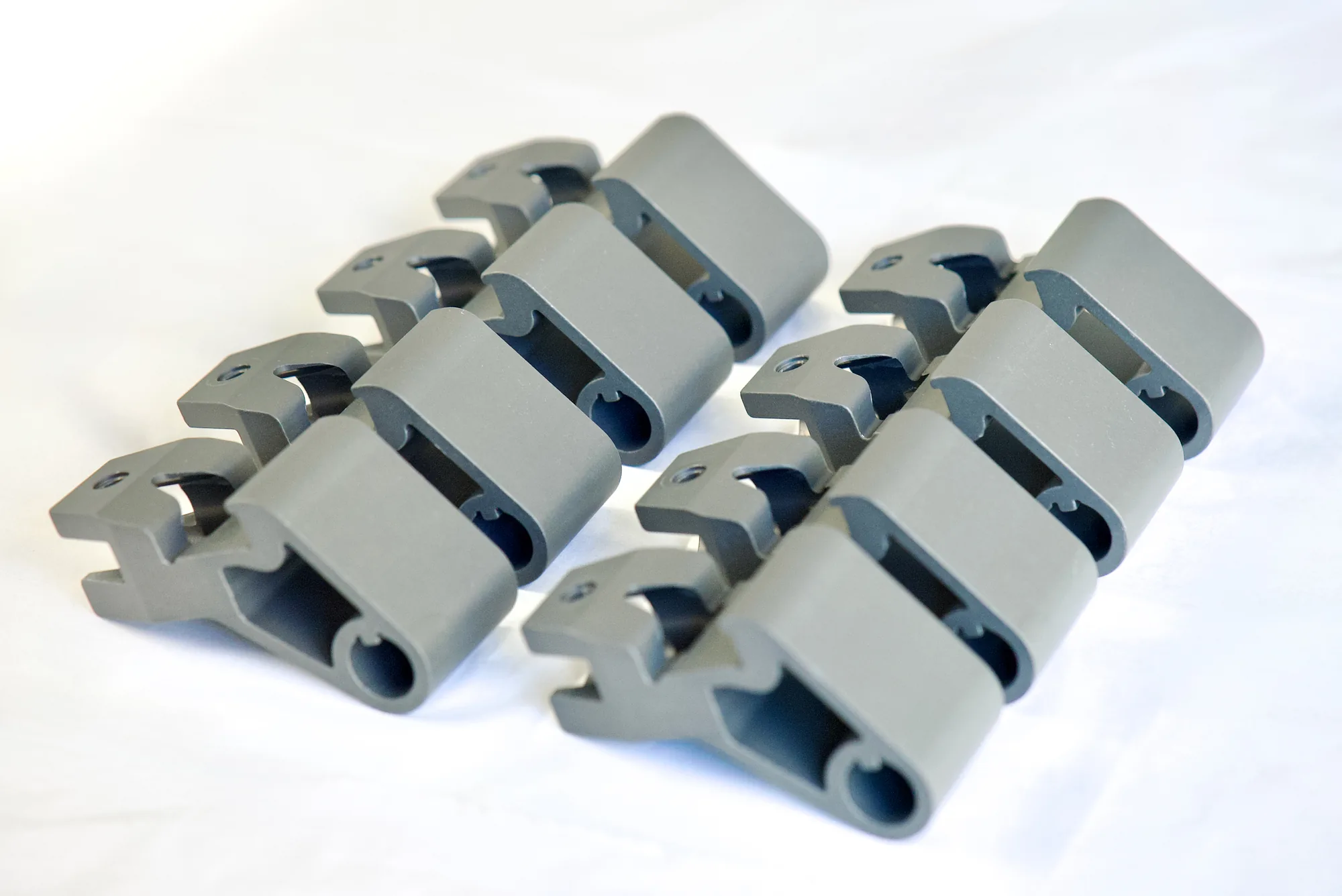
| Materials | Aluminium alloys |
|---|---|
| Thickness | Typically 25–70 microns |
| Finishes | Natural bronze / grey, or black · PTFE seal available |
| Standards | BS ISO 10074, plus customer specifications |
| Turnaround | Typically 5–7 working days · express available |
| Typical uses | Motorsport, aerospace, hydraulic components, pneumatic systems, defence equipment, precision engineering |
Maximum part size
| Finish | Max weight | Max size (L × D × Br) |
|---|---|---|
| Natural | 35 kg | 1110 × 400 × 600 mm |
| Black | 35 kg | 1110 × 400 × 600 mm |
| Red | 15 kg | 400 × 400 × 600 mm |
| Blue | 15 kg | 600 × 300 × 600 mm |
| Orange | 15 kg | 400 × 400 × 600 mm |
| Gold | 15 kg | 400 × 400 × 600 mm |
| Titanium / grey | 15 kg | 400 × 400 × 600 mm |
Please note: because hard anodising produces a darker base finish, dyed colours appear deeper and more muted than the same colours on sulphuric anodising.